 |  | ||||||||||
Team Section
| |||||||||||
 |  |









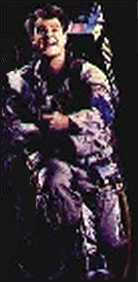 Dr Raymond Stantz
"... the hearth of the Ghostbusters" Peter Venkman "Ghostbusters"
Dr. Raymond Stantz once was a researcher of the New Your Columbia University where he conducted along with Dr Spengler and Dr. Venkman studies on the super natural. Once left away from the university with his friends he founded the Ghostbusters.During the period he also opened a bookstore on magic and mysteries called "Ray's Occult". Some time with the collaboration of Winston they went to children party to enjoy them dancing the Ghostbusters' theme. When the "Vigo" case exploded he went back with other guys in the Ghostbusters team. The definition that Peter gave of Ray at the end of GB could not be more exact. Ray is the real heart of the Ghostbusters in at least 3 ways.
The first most obvious is that Ray put all his money in the Ghostbusters business condamnig his old house given to him by his family. Thus, without the financial help of Ray GB cannot have been made.
The second, a little more difficult to get, is that Ray is played by Dan Aykroyd which is, with Harold Ramis, the Writer of both Ghostbusters and Ghostbusters II. However while Ramis joined Aykroyd in the writing of the movie after Ivan Reitman , the Director, started all the business, Aykroyd has been the original ideator of GB concept back, later the idea has been refined and resulted a way different from the original which is how we know it actually
The third is directly embedded in Ray character. All the four Ghostbusters are different one each other (check others members G-Files...). Ray is the "good" one. This don't mean that the others are evil but Ray is clearly the most enthusiastic of the four. He is the golden-heart and nostalgic man of the team, in one word Ray is the "Kid" of the group. Therefore we can see him in the first movie storm in to Venkman's office excited about the ghost at the library. In the hotel scene , when the guys exit from the lift Ray , certainly excited, get out ready to bust with is Particle gun armed , while ,for example, Peter come out calmly walking. I's all his guilt if the GB have as a HQ this old Firehouse totally unprepared for the GB requirements since it was so excited about this firing pole...In "Marshmallow Man Grand Entrance" scene Ray states that he summoned the Stay Puff because it remembered him his childhood as a boyscout. Another scene in GB2 significant is the one at the beginning when talking with Winston about the past he conclude the discussion with the "What a ride" line.
As a conclusion , we can say that Ray represents the emotional part of the Ghostbusters , the one who put first his feelings the all the other things.

Daniel Aykroyd
Fact Box Occupation: Actor, Comedian, Director, Producer, Screenwriter, TV writer Date of Birth: July 1, Place of Birth: Ottawa, Ontario, Canada Sign: Sun in Cancer, Moon in Libra Education: Carleton University in Ottawa Relations: Father: Samuel Cuthbert Peter Hugh Aykroyd (Canadian government official) ; mother: Lorraine Aykroyd (n�e Gougeon); brother: Peter Aykroyd; wife: Donna Dixon (actress); kids: Danielle Alexandra, Belle Kingston, Stella Irene Augustus |
Address C/O Creative Artists Agency 9830 Wilshire Blvd Beverly Hills, CA 90212 USA | Home Address
1180 S. Beverly Dr. #618 |
ON October 11, a show debuted on NBC that would forever change the face of television. It represented a new vision in TV comedy, the current standards of which were defined by the more mainstream offerings of Carol Burnett and Sonny and Cher. The brainchild of Canadian producer Lorne Michaels, the show comprised mainly anti-establishment, media-savvy sketch humor�much of which challenged the boundaries of what was then permissible for television. It was called Saturday Night Live, and it boasted a company of improv hellions, who staged a weekly comic insurrection against the censors. In forming his fringe ensemble cast, Michaels recruited comedians Chevy Chase, Garrett Morris, Laraine Newman, Jane Curtin, and temperamental genius John Belushi. He rounded out the cast with two of his countryfolk, Gilda Radner, his first hire, and writer-performer Dan Aykroyd, who quickly became the voice most respected by players and writers alike.
Aykroyd had already made a name for himself in Canada as a stand-up comedian at various nightclubs in and around Ontario. He had previously attended a Catholic seminary (he was expelled) and, later, Carleton University in Ottawa, where he studied psychology, political science, and criminal sociology; he also used his time there to write comedy sketches. Aykroyd eventually joined the celebrated Second City Comedy improv troupe in Toronto, and otherwise began racking up writing, producing, and acting credits in a number of Canadian films and television programs. During that period, he made the acquaintance of a comedian from the States named John Belushi, who happened to be on a talent-scouting trip to Toronto on behalf of The National Lampoon Radio Hour. But Aykroyd and Belushi were bound for stardom beyond their wildest expectations when they crossed back over the border to join the iconoclastic and irreverent cast of Saturday Night Live.
During Aykroyd's five-year tenure on S.N.L., his uncanny talent for mimicry and for creating memorable sketch personas became legendary. He revived political satire by delivering note-perfect impersonations of presidents Nixon and Carter (his Julia Child wasn't too shabby, either); he spun his fascination with U.F.O.s into a popular series of skits about the Coneheads, an Earth-bound family of pointy-headed aliens hailing from the planet Remulak; with Steve Martin, he created the "wild and crazy" Czechoslovakian playboys, Jorge and Yortuck Festrunk; and he and John Belushi earned immortality as the Blues Brothers, Elwood and Joliet Jake, two cool cats who dressed in suits, shades, and lids, and emulated black bluesmen. Belushi and Aykroyd would go on to capitalize on the popularity of Jake and Elwood's rousing S.N.L. rendition of "Soul Man" by reprising the characters in a film, The Blues Brothers (for which Aykroyd wrote the screenplay), and by recording two wildly successful albums (for which they staged a ten-city tour), Briefcase Full of Blues and Made in America.
It was by then abundantly clear to even the most disinterested observers that the S.N.L. players had crawled up from the underground to become Beautiful People in their own right, and with the call of stardom clamoring ever louder, it was no surprise that the original cast members had all departed for greater things by the end of the season. But Hollywood's lure wasn't the only culprit in the cast's dissolution. Drug abuse during those formative years had grown into a divisive and undermining problem for all of the players, with the exception of Jane Curtin and Gilda Radner (Radner called the cocaine that disappeared up her colleagues' nostrils at an alarming rate "devil's dandruff"). Even though Aykroyd and Belushi had forged an almost fraternal friendship, Aykroyd could never convince his cohort to pull himself together when his drug abuse began spiralling out of control. Belushi decided he had outgrown the S.N.L. playpen, and he finally called it quits. Drugs would claim his life two years later.
Not long after Belushi's departure form S.N.L., Aykroyd left the show to make movies. He soon became a familiar face in eighties comedies, starring in Doctor Detroit (), Trading Places (), Ghostbusters (), Spies Like Us () and Dragnet (). Along the way, Aykroyd teamed up with some of S.N.L.'s more notable alumni�Eddie Murphy, Chevy Chase, and Bill Murray. In the late eighties, a fleshier teddy bear of an Aykroyd tackled his first straight dramatic role, in Driving Miss Daisy, earning a Best Supporting Actor nomination. He has since acquitted himself well in various character actor assignments and in ensemble casts, though his recent efforts in comedy have elicited little more than yawns. Aykroyd's debut directorial effort, Nothing But Trouble (), failed miserably at the box office, and his feature film reprisal of the Coneheads (), which he also scripted, commanded only lukewarm response. Likewise, his ill-advised Blues Brothers sequel, Blues Brothers, did little to entrance critics upon its release. Aykroyd returned to the small screen in April with Soul Man, a sitcom he both developed and starred in.
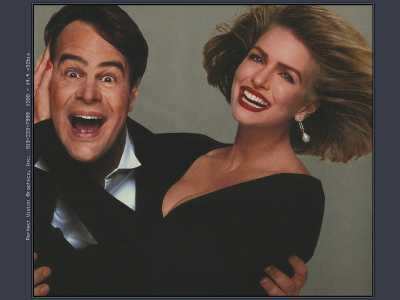
Also collaborated and hosts the PSI FACTOR TV series ideated by is brother Peter, where a special group of investigators deal with supernatural stuff. Unlike X-Files PF has a more scientific approach and is often based on real stories.
Dan Aykroyd holds a special place in the hearts and minds of Canadians because, despite his increasing fame, he has never forgotten his country. While he works in the United States primarily, he still makes time to return and develop work for the CBC. He is someone who does what he wants and loves despite risks and doesn't seem to care much what others may say in return. He seems to carry with him a pride in being Canadian that is very rarely seen and should be greatly appreciated.